Excerpts from 'Getting the frozen south down cold' by Mike Wade, The Scotsman
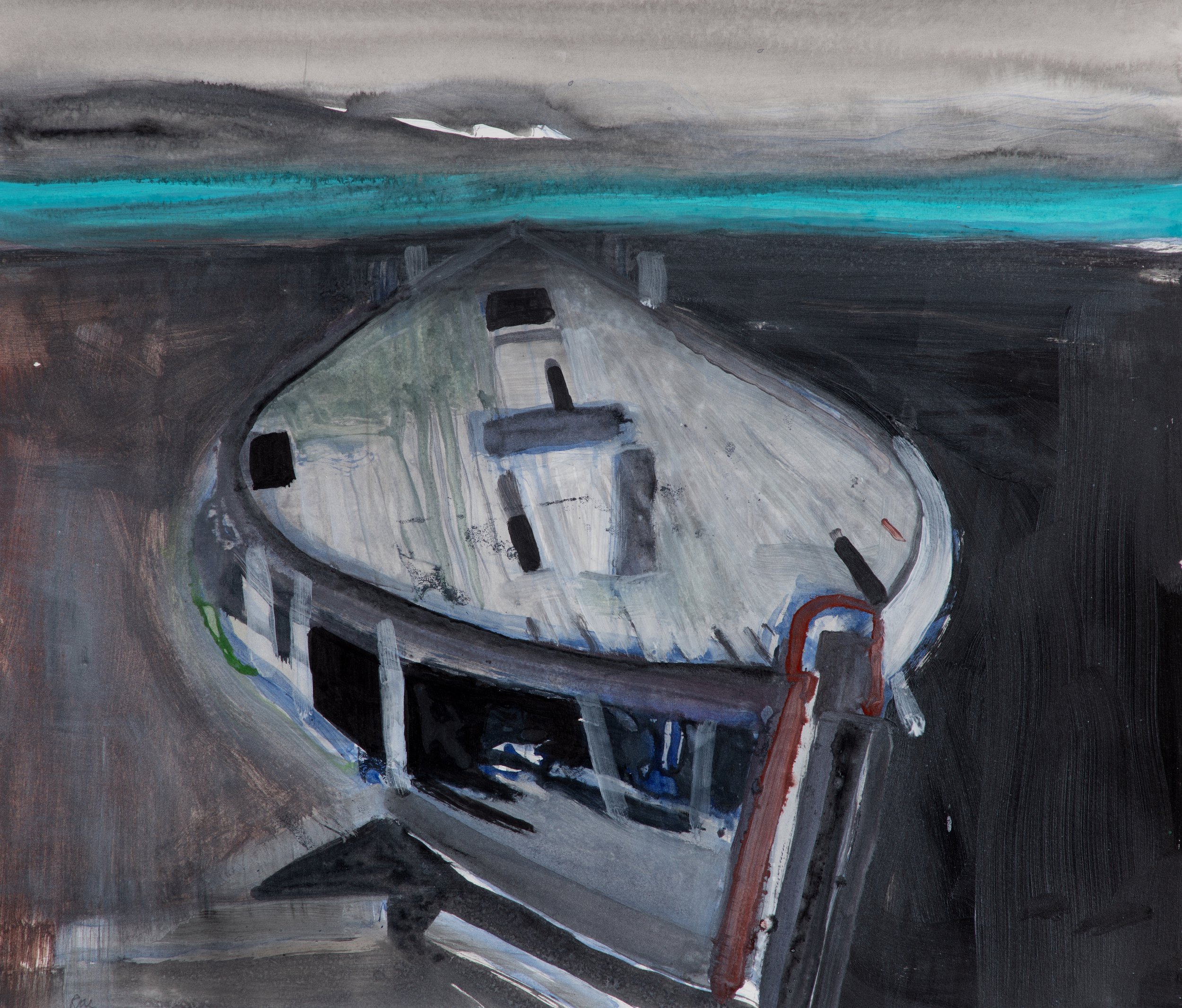
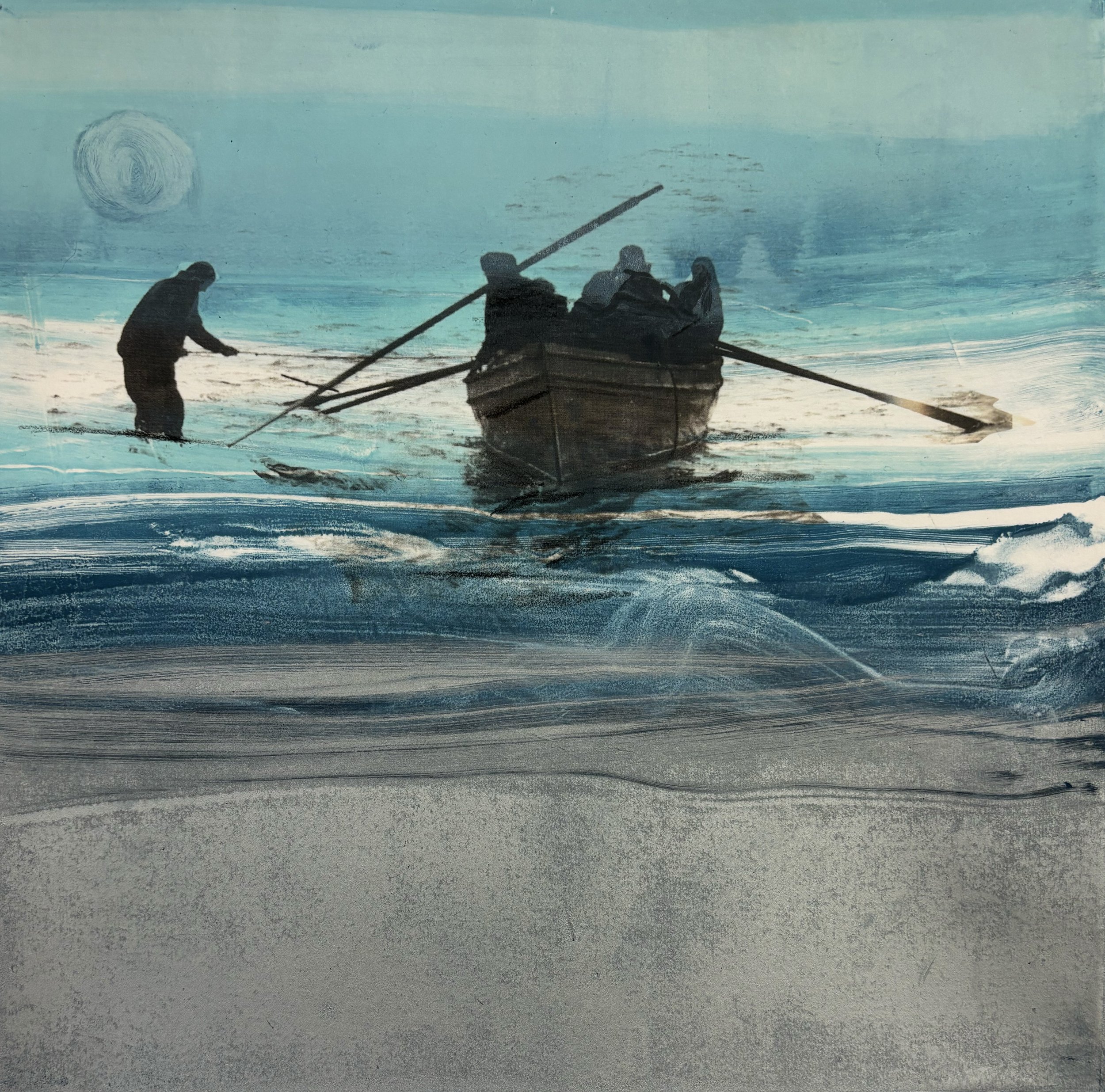
Sailing down the Beagle Channel away from Tierra del Fuego towards Antarctica, the artist Dame Barbara Rae never thought for a moment that the purpose of her expedition was “to see bloody penguins”. Yet here she is, almost two years later, safely ensconced in Edinburgh’s Royal Scottish Academy building, scrolling through images on her mobile phone, seeking out pictures she has made from photographs she took of the birds.
After travelling four times to the Arctic from 2015 to create her powerful show The North West Passage, Antarctica became an inspiration for the 82-year-old artist, against, it seems, her own expectations. On her website the text is explicit: “Rae is not interested in topography. Her point of departure is the history of a place and its people. Abstract expressionist themes are given maximum intensity… she distils the presence of mankind.”
Contemplating Antarctica, she says: “I set off thinking, I’m going to see a pile of ice and mountains – I thought, there’s no people there, no history – what am I going to be interested in?”
Two extraordinary human stories, etched onto the icy landscape, transformed her understanding. The first of these was the epic struggle more than a century ago of Sir Ernest Shackleton and his crew after their ship, The Endurance, was crushed and sank in the ice.
After drifting for six months on pack ice from October 1916, the 28-strong crew braved a five-day voyage in small boats through mountainous, icy seas to Elephant Island. Then Shackleton himself led a party of six, in the James Caird lifeboat, on a perilous 800-mile voyage to King Haakon Bay, on the uninhabited south coast of South Georgia.
It would take another 36-hour trek overland through unmapped, mountainous wilderness before Shackleton reached the whaling station at Stromness and began to organise a rescue mission for the remaining crew on Elephant Island. Ultimately, all the men were saved.